Why the Rexroth Hydraulic Pump Keeps Appearing in Serious Engineering Conversations
Some technical terms persist not because of marketing, but because they quietly earn a place in shared professional language. The phrase rexroth hydraulic pump is one such example. It appears in lecture halls, design notes, maintenance logs, and engineering debates—not as a slogan, but as a reference point.
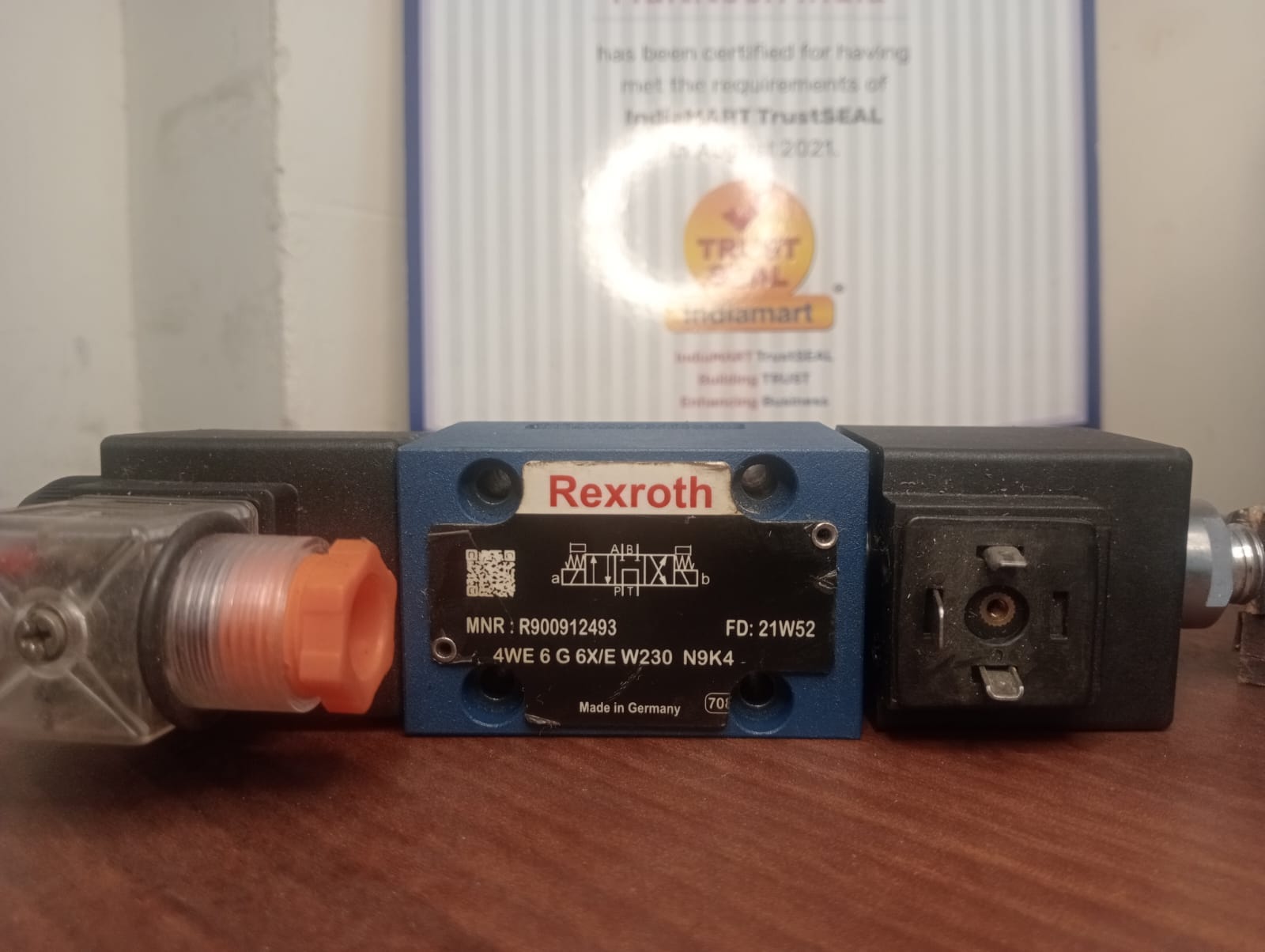
This article reflects on why that happens, and what it reveals about how engineers think about reliability, structure, and learning.
A Pump Is Not Just a Component—It Is an Assumption
In many mechanical systems, the pump is treated as a given. Once selected, attention shifts elsewhere: cylinders, valves, controls. Yet the pump quietly defines the entire system’s behavior. Flow character, response timing, and system stability all originate there.
When engineers mention a rexroth hydraulic pump in discussion, it is often shorthand for a predictable starting point—an assumed baseline from which calculations make sense and simulations behave as expected.
That kind of assumption is not casual. It is earned.
Familiarity as a Tool for Thinking
Engineering thinking depends heavily on shared mental models. When everyone in the room understands how a component behaves under load, conversation becomes more precise.
In this context, the rexroth hydraulic pump functions almost like a common language. It allows engineers to discuss:
Expected flow response without lengthy explanation
Pressure behavior without redefining constraints
System outcomes without revisiting fundamentals
This familiarity reduces cognitive friction, especially in complex system design.
What Repetition in Textbooks Really Signals
When the same pump architectures appear repeatedly in academic diagrams and technical references, it is tempting to assume brand dominance. A more accurate interpretation is pedagogical usefulness.
Clear internal geometry, consistent operating ranges, and well-documented behavior make certain pump examples easier to teach with. Over time, those examples become embedded in curricula—not because they sell, but because they explain.
This is where the rexroth hydraulic pump often enters the educational narrative.
Reliability as a Learning Concept, Not a Promise
Reliability is frequently misunderstood as a guarantee. In engineering education, however, reliability is treated as a relationship between design, conditions, and maintenance.
Studying pumps that behave consistently under known constraints allows learners to isolate variables:
What changes when viscosity shifts
How temperature alters efficiency
Where wear patterns originate
These lessons are transferable, regardless of manufacturer.
The Quiet Importance of Documentation Culture
Another reason certain pump references persist is documentation discipline. Clear identification systems, stable naming conventions, and long-term continuity make it easier for engineers to compare systems across time.
In reflective terms, this is less about hardware and more about culture—the culture of recording, standardizing, and explaining engineering decisions.
That culture shapes how future engineers learn.
Questions Engineers Often Ask (and Why They Matter)
Does a pump create pressure on its own?
No. Pressure emerges when flow meets resistance.
Why do some pump examples feel “universal”?
Because they align closely with theoretical models taught in fluid mechanics.
Is studying one pump type limiting?
Not if the goal is understanding principles rather than products.
A Closing Reflection
The persistence of the term rexroth hydraulic pump in technical discourse says less about commerce and more about trust—trust in predictability, clarity, and shared understanding.
In engineering, the tools we reference repeatedly are often the ones that allow us to think more clearly. And sometimes, the most influential components are not the loudest ones, but the most consistently understood.